We came to the Surrey Hills for the usual reasons — space, quiet, and the sense that a Saturday morning might be measured in miles rather than meetings.
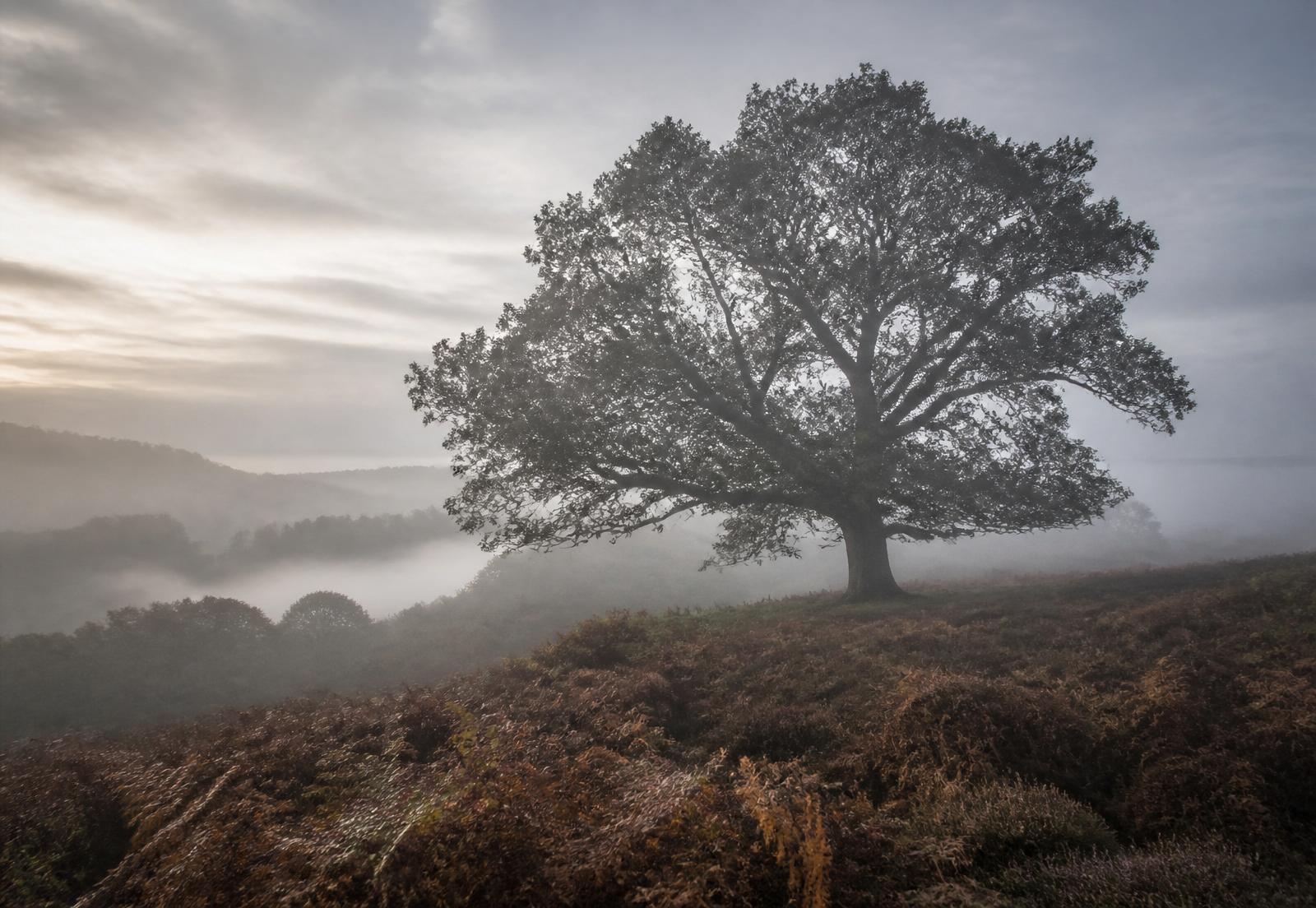
It is a landscape that rewards going slowly. Lanes narrow to a single car's width and then drop between banks so high and so worn that you walk below the level of the fields. Beech hangs over the sunken tracks; the ground underfoot turns from soft sand to sticky clay within half a mile, and you learn to read which is which by the sound your boots make. Bracken and heather on the higher ground, oak and holly in the shade, blackthorn and hazel in every hedge that has been allowed to do as it likes.
It is also, plainly, a comfortable corner of England — and not an idle one. There are Georgian frontages and there are farm gates waiting to be rehung; there are people who catch an early train and people who are already out in the fields before it leaves. What they share is a habit of being outside in weather that would keep most of the country indoors.
The buzzards.
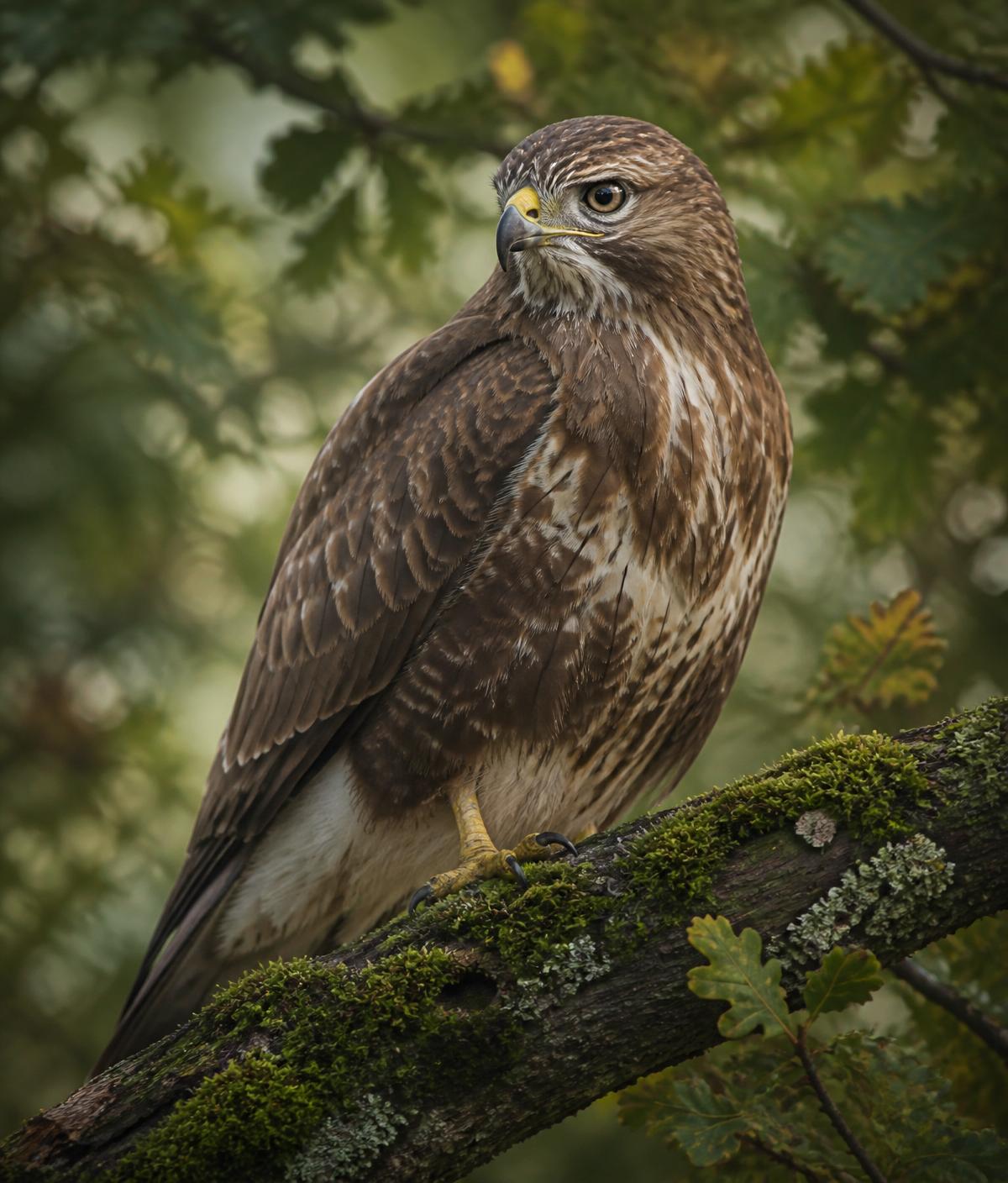
You usually hear one before you see it — a thin, cat-like mewing somewhere above the tree line, circling on a thermal so lazily that it seems to be doing nothing at all. That is the buzzard as most people know it: a shape at altitude, easy to mistake for something smaller.
Occasionally, though, it comes down to your height. You round a bend on an early walk and there it is, improbably close, sitting on a low branch directly over the path. Not startled. Not hurried. Watching. Then, just as you begin to feel observed, it drops off the branch, takes two slow, heavy beats and sweeps along the line of the path ahead of you — low between the banks, wings almost brushing the hedge — before settling on another branch a little further on. A new vantage point, the same unblinking attention. Twice, three times in a mile, as though it were showing you the way.
It happens rarely enough to feel like an event. Often enough to become a kind of companion.
The sloes.
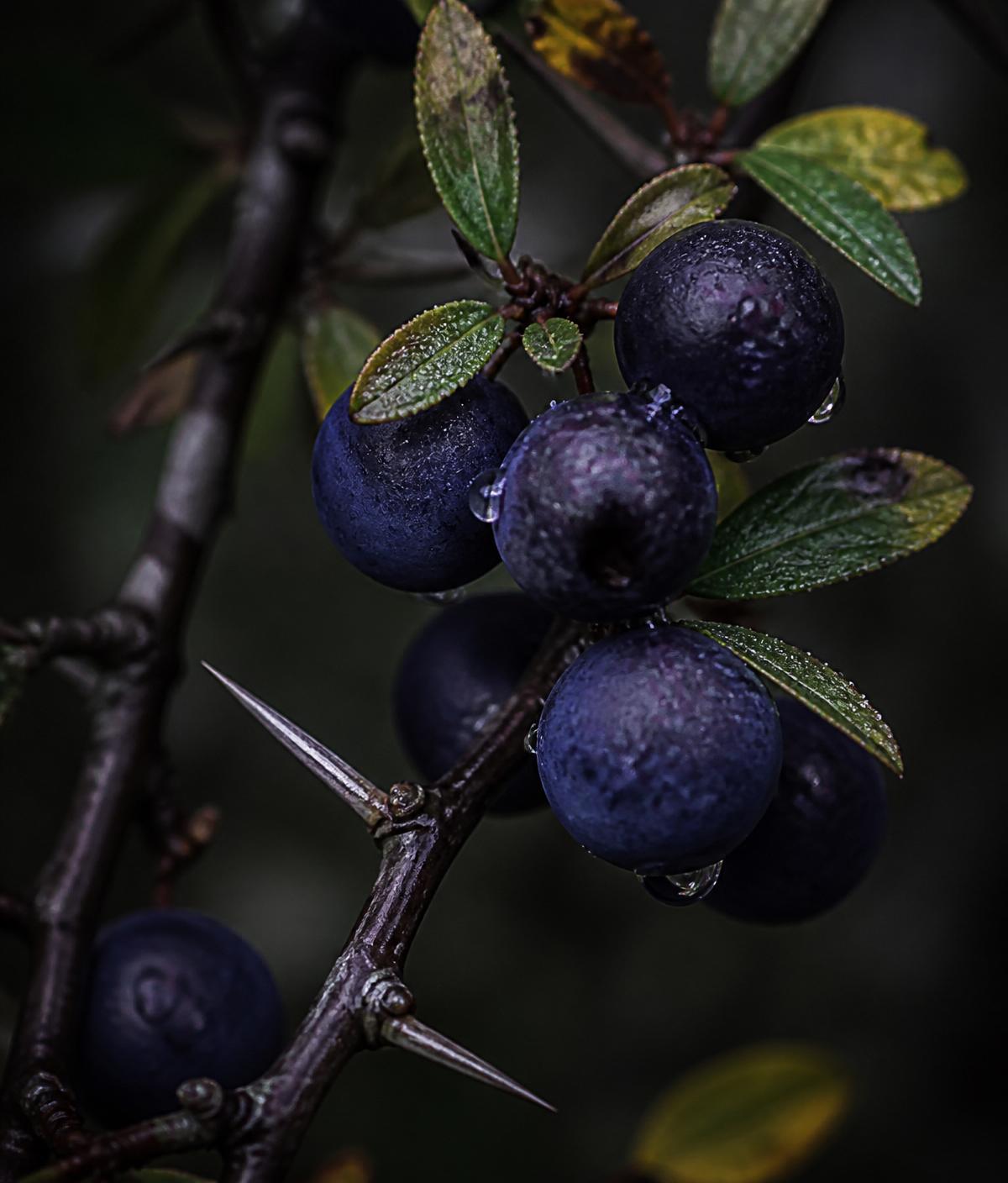
The same walks gave us the sloes. Blackthorn is the first thing in the hedge to flower — a shock of white on black wood while the rest of the lane is still bare — and the last to give anything back. All spring and summer the fruit hides in behind thorns that will find your wrists whatever you wear. Then, some time in autumn, the berries go from green to a deep bloomed purple, and the picking begins.
We waited for the cold, out of tradition as much as anything, and took them in jacket pockets and an old bag — never stripping a bush, always leaving plenty for the birds. The ritual became as fixed as the walks: gloves on, flask in hand, the dog pretending not to notice when we stopped.
Sloe gin is a patient drink. Prick the fruit, add sugar and gin, and leave it somewhere dark for months. By Christmas it has turned the colour of garnet; by February it is the thing you offer a friend who has walked through the cold to see you. Something gathered freely from the hedgerow, then improved by time and care — that felt like the right idea for a brand.
The name.
Buzzard & Sloe is simply what the place gave us. The bird that measures the path ahead; the fruit that sweetens only after frost. Both are common, both are extraordinary, and neither performs for an audience. We wanted a name that sounded like the walk itself — unhurried, alert, a little wild.
What we make.
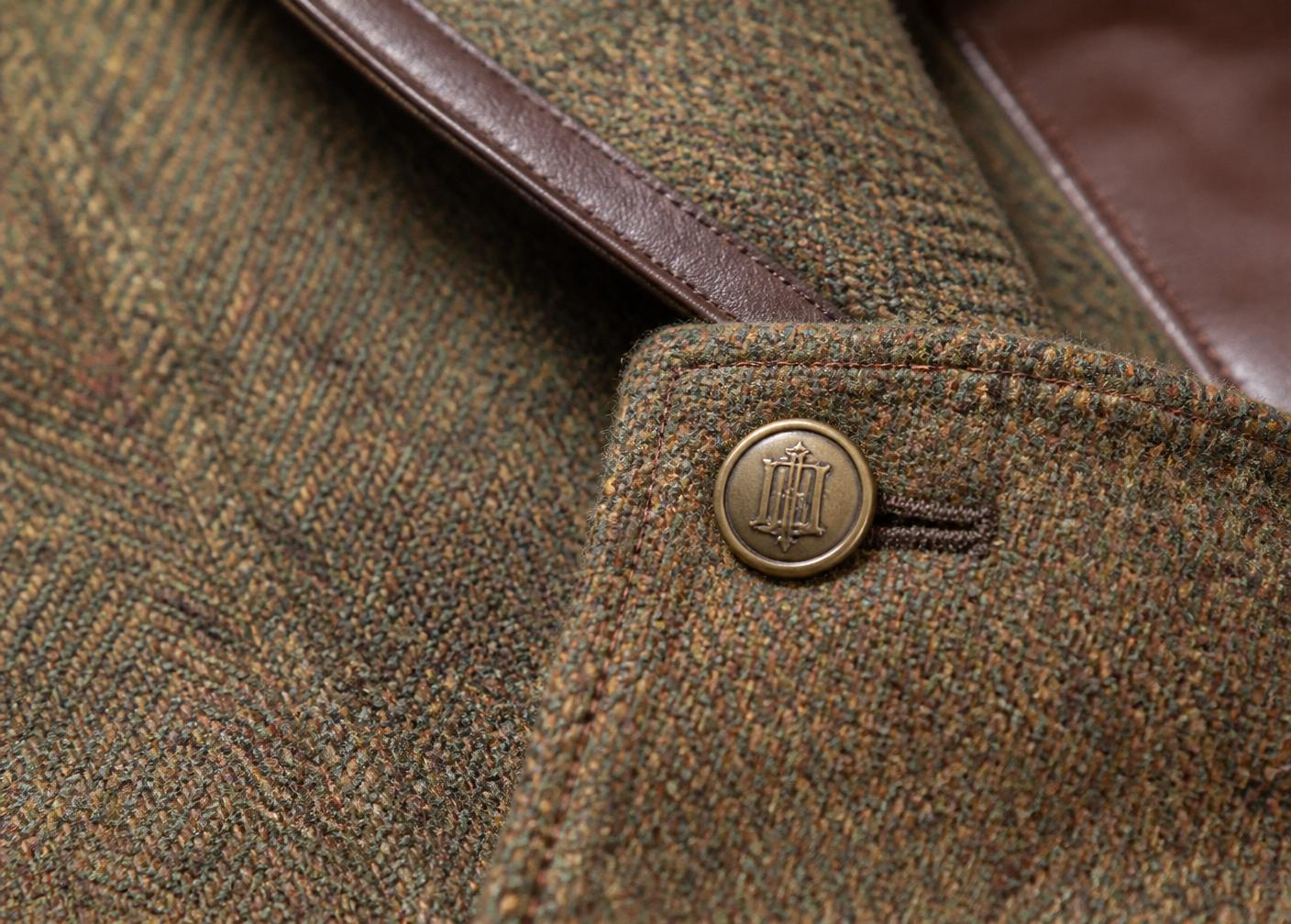
The hills are not a uniform place, and neither is the wardrobe they ask for. In a single morning you might pass a mud-flecked estate car outside an old farmhouse, a van parked in a gateway, and a cyclist on the climb with the whole day ahead of him. Our clothes are for the people in the middle: comfortable enough to live well, sensible enough to know the value of good boots and a coat that keeps the rain out.
We nod to the grand house in the cut of a shoulder and the weight of a cloth. We nod to the person who works outdoors in the pockets, the hems, and the plain expectation that a garment should be worn for years rather than a season. Our customer might own the view, or simply borrow it for the weekend. Either way, they understand that refinement is earned rather than announced.
Who we are for.
For the person out in the lanes before breakfast and pouring a sloe gin after supper. For those with muddy dogs and clean tables. For anyone who believes the best clothes are the ones that improve with use, weather, and memory — just like a walk in the hills.
— Buzzard & Sloe